
The Pakistani passport, issued by the Directorate General of Immigration and Passports (DGIP) under the Ministry of Interior, is the official travel document for citizens of the Islamic Republic of Pakistan. It serves as proof of Pakistani citizenship and identity, and is required for international travel and re-entry into Pakistan. Pakistan introduced machine readable passports in 2004 and biometric e-passports in April 2022, with chip-enabled passports meeting ICAO international standards.
The Pakistani passport sits in the lower tier of global passport rankings, currently among the weakest passports in South Asia. Pakistan's mobility is limited by strict visa requirements imposed by most major economies, with diplomatic efforts focused primarily on strengthening ties with GCC nations, China, Turkey, and selected African and Caribbean countries.
Types of Pakistani Passports
Ordinary Passport (green cover): issued to Pakistani citizens for personal and business travel. Available in 36, 72, and 100 page versions, with validity options of 5 or 10 years.
Official Passport (grey cover): issued to government officials and civil servants travelling on official duty.
Diplomatic Passport (red cover): issued to members of the Pakistani government, ambassadors, and senior diplomats.
Travel Document: issued to stateless persons and refugees authorised by the Pakistani government to travel internationally.
Validity of a Pakistani Passport
A standard Pakistani passport offers a choice between 5 year and 10 year validity for adults. For minors, the validity is typically 5 years. The passport can be issued in three page count options (36, 72, or 100 pages) to suit different travel frequencies. Pakistani passports can be renewed up to 12 months before expiry through any Regional Passport Office (RPO) in Pakistan or at any Pakistani embassy or consulate abroad. Most destinations require the passport to be valid for at least six months beyond the intended date of departure.
What Does It Look Like?
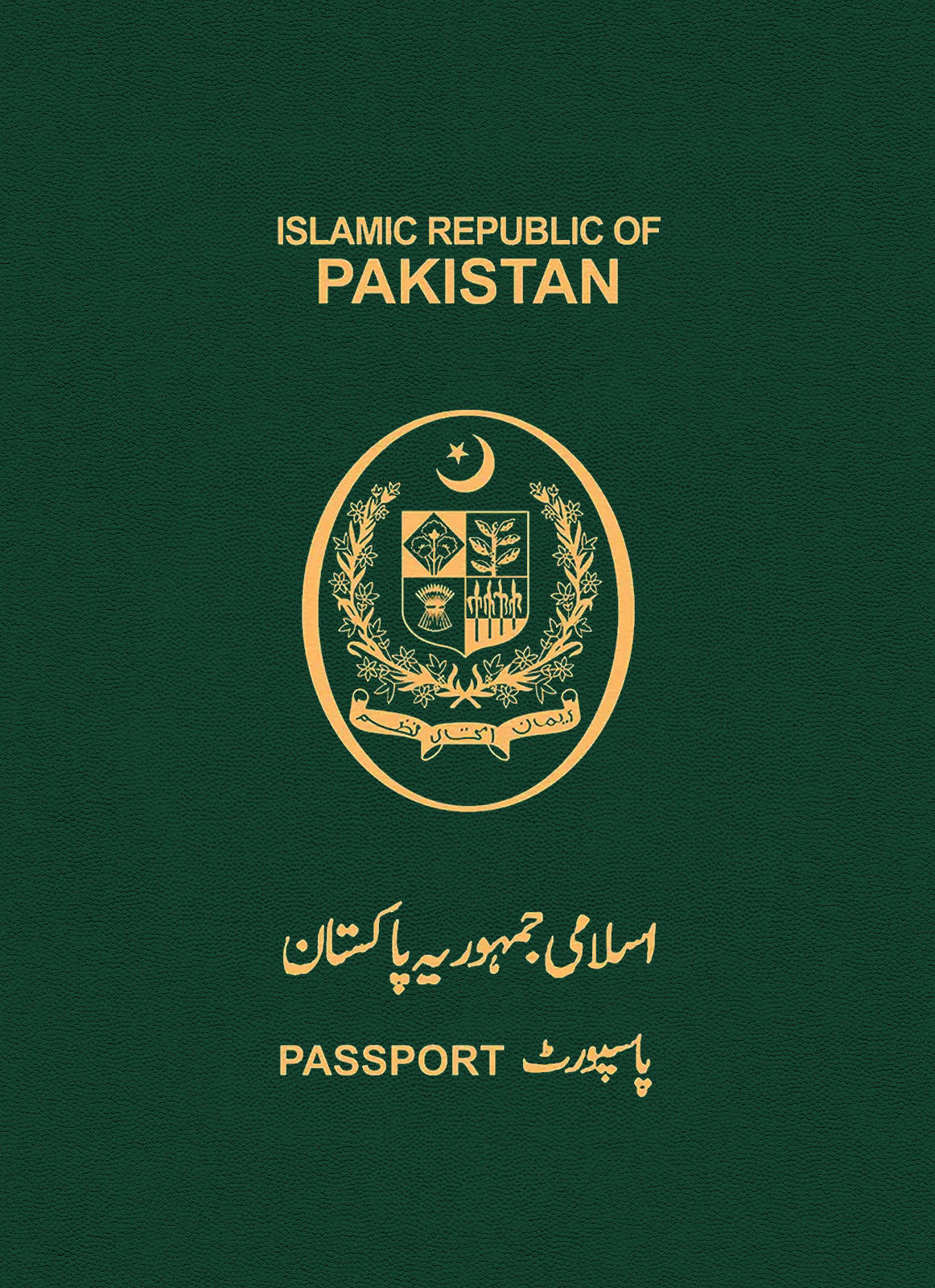
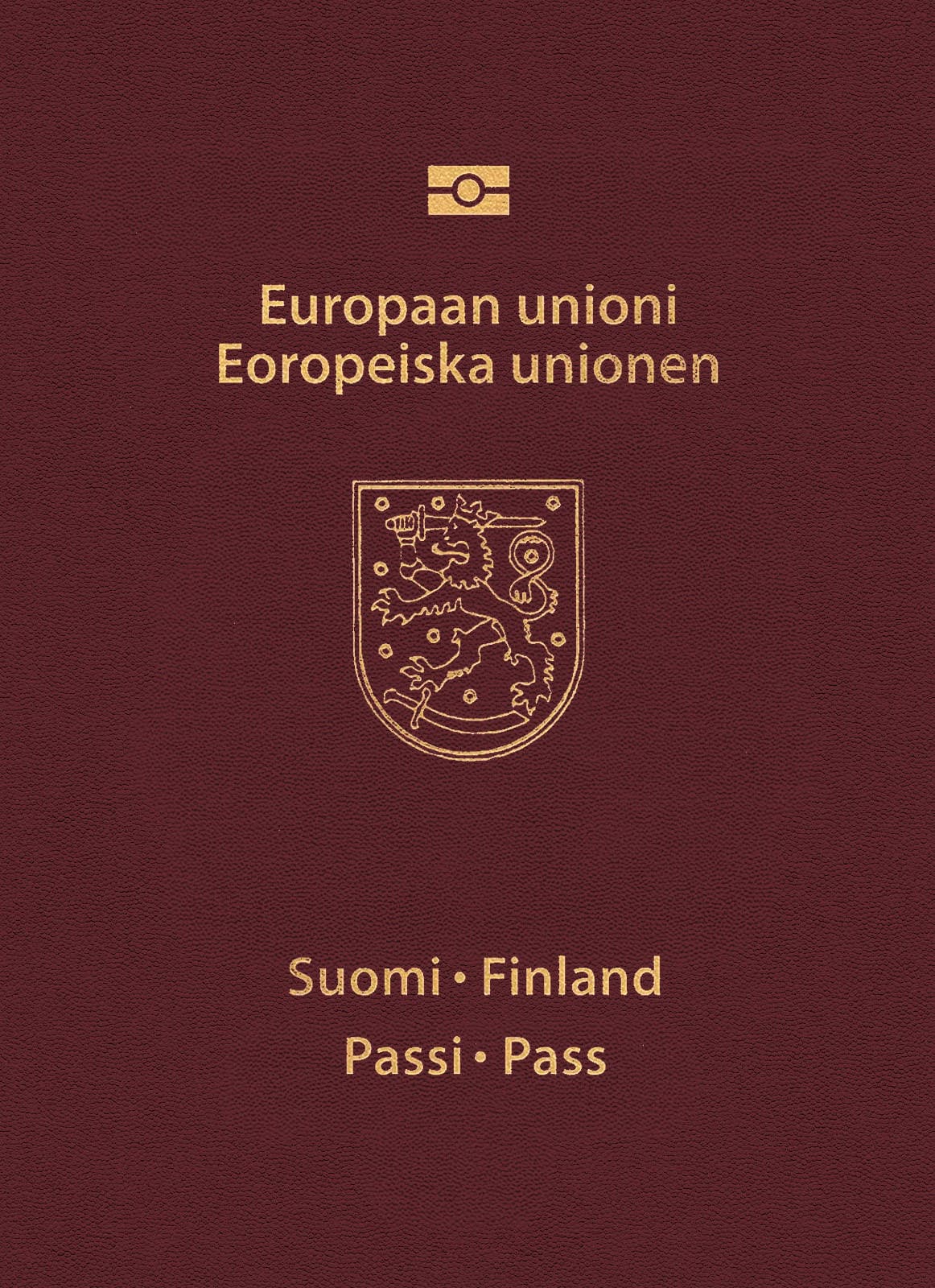
The standard Pakistani passport has a dark green cover featuring the national emblem of Pakistan embossed in gold. The words "ISLAMIC REPUBLIC OF PAKISTAN" and "PASSPORT" are printed in gold in both English and Urdu. The cover displays the inscription "اسلامی جمہوریہ پاکستان" in Urdu, the national language of Pakistan. The biometric chip symbol is displayed near the bottom of the cover on the new e-passport, indicating compliance with ICAO standards. The newer 2022 generation e-passport features a polycarbonate data page, advanced security elements, and a biometric chip embedded in the cover.
Inside the Passport
The identity page includes the following details:
Passport holder's photograph
Full legal name in English and Urdu
Passport number
Country Code (PAK)
Nationality (Pakistani)
Date and place of birth
Sex
Date of issue and expiration
Issuing authority
Signature of the bearer
CNIC number (Computerised National Identity Card number)
Machine Readable Zone (MRZ)
Pakistani e-passports issued since April 2022 contain an embedded biometric chip storing the holder's fingerprints, facial features, and digital signature. Older machine readable passports (issued 2004 to 2022) remain valid until their expiry date.
Visa Free Access with a Pakistani Passport
As of 2026, Pakistani passport holders can access 42 destinations without applying for a visa in advance. This includes 13 fully visa free entries and 29 visa on arrival destinations. Pakistani citizens enjoy visa free access to a small group of destinations including Barbados, Dominica, Haiti, Micronesia, Saint Vincent and the Grenadines, Trinidad and Tobago, Vanuatu, and the Cook Islands. Visa on arrival is available in destinations like the Maldives, Nepal, Cambodia, Cape Verde, Madagascar, Sri Lanka, Seychelles, Kenya, and several African and Pacific island nations. Major destinations that require advance visas for Pakistani citizens include the Schengen Area, the United Kingdom, the United States, Canada, Australia, China, and most GCC member states.
A practical note for Pakistani travellers: holding multi entry visas or permanent residency from Schengen Area countries, the United Kingdom, the United States, Canada, GCC states, or Australia often unlocks visa on arrival or eVisa access to additional destinations that would otherwise require an advance visa. This makes building a strong visa history one of the most effective ways to expand travel options.
Passport Strength and Ranking
According to the Atlys Passport Index 2026, the Pakistani passport ranks 92nd globally with a mobility score of 42. Pakistan currently sits among the lowest ranked passports in the world, alongside Iraq, Syria, Yemen, and Afghanistan. Within South Asia, Pakistan trails India (68th), Sri Lanka, and Bangladesh in mobility. The Pakistani passport's position reflects ongoing diplomatic challenges, security concerns from receiving nations, and limited bilateral visa waiver agreements. Recent positive developments include strengthened relations with China through CPEC, expanded eVisa eligibility from several countries for Pakistani residents holding valid Schengen, UK, or US visas, and improved electronic systems with the 2022 e-passport rollout.
The Pakistani passport reflects the country's complex diplomatic positioning and ongoing efforts to expand global mobility. With access to 42 visa free or visa on arrival destinations, the new e-passport biometric security features, and a tiered validity and page count system that gives travellers flexibility, the Pakistani passport continues to serve over 250 million Pakistani citizens at home and abroad. Long term improvements to passport strength depend on broader diplomatic outreach, security cooperation, and the increasing economic weight of Pakistan as one of the world's largest populations.